How to Select a Glassware Washer for Environmental Monitoring Labs: Avoid Hidden Pitfalls in Trace Analysis
Views: 0 Author: Site
Editor Publish Time: 2026-11-23 Origin: Site
For environmental monitoring labs, reliable test data starts with thoroughly cleaned labware. Many lab data deviations do not stem from instrument inaccuracy or improper operator practices. Instead, they originate from an easily overlooked pre-treatment step: glassware cleaning.
Water quality, soil, sediment and waste gas testing mostly involve trace and microanalysis. Parameters such as total phosphorus, total nitrogen, ammonia nitrogen, heavy metals and VOCs set strict requirements on glassware cleanliness. Even tiny invisible residues on bottle walls can raise blank values, cause excessive deviation between parallel samples, shift detection limits, and invalidate entire batches of samples.
Many buyers only compare capacity, price and appearance when shopping for washers. Standard general-purpose models often fail to meet quality control standards for trace environmental testing. Below is a practical guide for selecting the right glassware washer.
1. Chamber Material: Prevent Metal Ion Leaching
Labware in environmental labs is frequently cleaned with acidic and alkaline detergents, so the chamber must resist strong corrosion. Ordinary 304 stainless steel chambers corrode over repeated exposure to acid and alkali, releasing metal ions that skew heavy metal test results. Prioritize washers with a onepiece 316L stainless steel chamber. Smooth rounded corners and minimal welds reduce contamination traps and prevent ion leaching for long-term trace analysis.
2. Spray System & Racks: Fit Mixed Environmental Labware
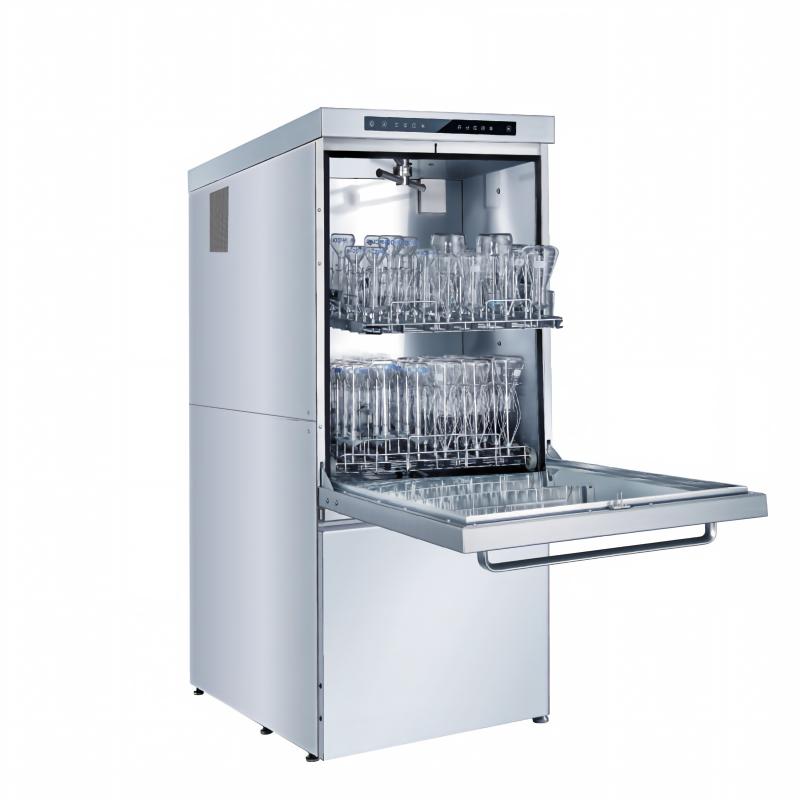
Environmental labs use a wide range of containers: sampling bottles, digestion tubes, colorimetric tubes, volumetric flasks and centrifuge tubes of different heights and sizes. Many basic washers only spray water over surfaces. Dead zones at bottle bottoms, threads and inner walls retain organic matter, nitrogen and phosphorus contaminants, which gradually compromise data stability. Key features to look for:
· Targeted spray nozzles that reach deep into narrow tubes and bottles
· Customizable, tiered racks that separate glassware for organic and inorganic tests Separate washing eliminates crosscontamination for high-volume, multiparameter testing.
3. Flexible Wash Programs: Separate Organic & Inorganic Cleaning
Organic and inorganic analyses require different cleaning routines. One preset program cannot cover all test types. Heavy metal testing needs acid soaking and multiple final rinses with pure water. Total phosphorus, total nitrogen and organic analysis require alkaline washing, hightemperature emulsification and repeated rinsing. High-quality washers let users freely adjust temperature, duration, detergent dosage, rinse cycles and drying modes. Custom saved programs deliver consistent, standardized cleaning and reduce human error.
4. Drying System: Stop Secondary Contamination
Clean washing does not guarantee clean drying. Basic open or unfiltered hot air drying blows dust and airborne particles onto glassware, which is a common cause of high blank values in trace tests. Choose models with HEPA-filtered hot air drying inside a sealed chamber. Filtered air keeps glassware clean and ready for immediate use after washing.
5. Traceable Data Records: Meet CNAS Audit Requirements
Third-party environmental labs and government monitoring stations face regular internal and external audits, including CNAS assessments. Manual cleaning leaves no retrievable records and creates compliance risks. Smart automatic washers log full run data: timestamps, temperature curves, program settings and operator records. Data can be viewed and exported easily to complete your lab quality control workflow.
6. On-site Support: Match Your Actual Lab Conditions
A glassware washer is not a simple plug-and-play device. Cleaning performance depends heavily on rack configuration, detergent selection and program tuning. Reliable suppliers provide on-site commissioning, custom cleaning plans tailored to your test portfolio and handson staff training. Fast local aftersales support also matters for long-term stable operation.
Glassware cleaning is the first line of quality control for environmental monitoring. Do not base your choice only on price or tank volume. The right washer delivers a full cleaning solution that reduces residual contamination, stabilizes test results, satisfies compliance rules and fits your daily lab workflow. A suitable automatic washer cuts repetitive manual work and safeguards the accuracy and reliability of your monitoring data.